Quran Study : Surah Al Feel (The Elephant)

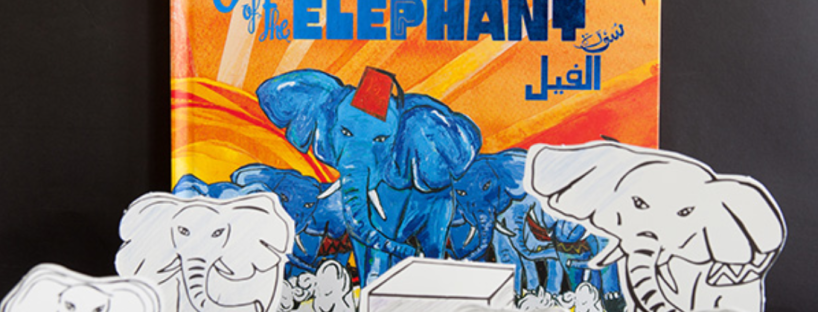
Prophet Muhammad was born 50 days after the event of the Year of the Elephant. What is the Year of the Elephant? It refers to a very famous incident that took place in the Arabian country and it demonstrates how God protected the land that was to become the focal point of the last revelation. Chapter 105 entitled The Elephant consist of five short verses, described briefly because it was an event still clear in the minds of those people in Mecca and the surrounding areas.

بِسْمِ اللهِ الرَّحْمٰنِ الرَّحِيمِ

In the name of Allah, the Entirely Merciful, the Especially Merciful.
慈悲あまねく慈愛深きアッラーの御名において。

اَلَمْ تَرَكَيْفَ فَعَلَ رَبُّكَ بِاءَصْحٰبِ الْفِيلِ

Have you not considered, [O Muhammad], how your Lord dealt with the companions of the elephant? [あなたの主が,象の仲間に,どう対処なされたか,知らなかったのか。]

اَلَمْ يَجْعَلْ كَيْدَ هُمْ فِى تَضْلِيلٍ

Did He not make their plan into misguidance?
[かれは,かれらの計略を壊滅させられたではないか]

وَاَرْسَلَ عَلَيْهِمْ طَيْرًا اءَبَا بِيلَ

And He sent against them birds in flocks,
[かれらの上に群れなす数多の鳥を遣わされ,]

تَرْمِيهِم بِحِجَا رَةٍ مِّن سِجِّيلٍ

Striking them with stones of hard clay,
[焼き土の礫を投げ付けさせて]

فَجَعَلَهُمْ كَعَصْفٍ مَّاءْ كُولِ

And He made them like eaten straw.
[食い荒らされた藁屑のようになされた。]

Various historical reports tell us that the Abyssinians had expelled the Persians from Yemen.  They established their rule there under the Abyssinian governor Abrahah.   He established a splendid and expensive church in his capital because he had witnessed the love and enthusiasm the Yemeni Arabs had for their Holy House at Mecca, and he hoped to entice them away from there and to his capital at Sa’na.  He hoped to divert the annual pilgrimage from the Ka’bah to the new church.

Because his intention did not happen, he determined to destroy the Holy House. He set out for Mecca with a large army which included thirteen elephants, with the target of demolishing the Ka’bah.  As Abrahah’s armies approached the city, God intervened.  It is said that the lead elephant sat down and refused to move towards the city.  The elephant trainers tried all they could to make the elephant move but he refused.  When he was encouraged to move in a different direction the elephant cooperated but when turned towards Mecca he refused.

Continue reading

Incredible Benefits of Prayer

Almighty Allah commands the believers to strictly establish the five obligatory prayers at all times. It can be found in the following verses of the Noble Quran.

حَٰفِظُواْ عَلَى الصَّلَوَٰتِ وَالصَّلَوٰةِ الْوُسْطَىٰ وَقُو مُواْ لِلَّهِ قَٰنِتِينَ

“Guard strictly (the five obligatory) prayers.” (Surah Al Baqarah 2:238)

اِنَّ اْلصَّلَوٰ ةَ عَلَى الْمُوءْ مِنِينَ كِتَٰبًا مَّوْقُوتًا

“Indeed, the prayer is enjoined upon the believers at prescribed times.”

(Surah An Nisaa’ 4:103)

「本当に礼拝には,信者に対し定められた時刻の掟がある。」

He also severely warns those who neglect them.

فَخَلَفَ مِن بَعْدِهِمْ خَلْفٌ اَضَا عُواْ الصَّلَوٰةَ وَاتَّبَعُواْ الشَّهَوَٰتِ فَسَوْفَ يَلْقَوْنَ غَيًّا

“Then there succeeded them a posterity who neglected the prayers and followed lusts; so they will soon be thrown into Hell. ” (Surah Maryam, 19:59)

「それなのにかれらの後継者が礼拝を怠り,私欲に耽ったので,
やがて破滅に当面することになるであろう。」

Washes away sins
Once the Prophet Muhammad (peace be upon him) asked his companions, “If there was a river by the door of any of you in which he takes a bath five times a day, do you think that any of his dirt would remain?” They replied, “None of his dirt will remain.” The Prophet (peace be upon him) then said, “That is the example of the five (obligatory) prayers through which Allah wipes sins away.” [Al Bukhari and Muslim]


Shields against evil
Without seeking Allah’s help, it is impossible to refrain from evil. Allah says,

اِنَّ اْلصَّلَوٰةَ تَنْهَى عَنِ الْفَحْشَآءِ وَالْمُنْكَرِ

“Verily, prayer restrains (oneself) from shameful and unjust deeds…”
(Surah Al Ankabut 29:45)
「本当に礼拝は,(人を)醜行と悪事から遠ざける。」


Makes you humble

Realising Allah’s greatness and how we dependent on Him will sure make our soul far from pride and arrogance. In the prayer, the believer puts the highest part of his body and source of intellect, his brain, on the ground and says, “How perfect is my Lord, The Most High.”

(قَدْ اءَفْلَحَ الْمُوءْمِنُونَ (١) اْلَّذِينَ هُمْ فِى صَلَا تِهِمْ خَٰشِعُونَ(٢

He says, “Successful indeed are the believers, who are humble in their prayers.” (Surah Al Mu’minun 23:1-2).

「信者たちは,確かに勝利を勝ちとる。かれらは,礼拝に敬虔であり。」


Solves your problems

Through prayer, He, who is All-Poweful, will rectify all of our problems. Allah says,

يَٰٓاءَ يُّهَا اْلَّذِينَءَامَنُواْ اسْتَعِينُواْ بِاْ لصَّبْرِ وَاْلصَّلَوٰةِ
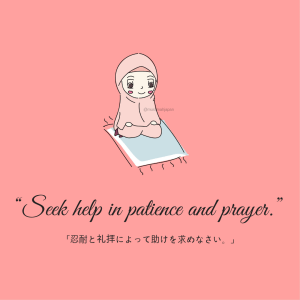
“Seek help in patience and prayer.” (Surah Al Baqarah 2:153)

「忍耐と礼拝によって助けを求めなさい。」


Unites the Muslims

The Prophet (peace be upon him) said, “The prayer in congregation (jamaah) surpasses the prayer performed individually by twenty-seven degrees” [Al Bukhari and Muslim].
Congregational prayer cultivates brotherhood, equality and humility between Muslims. We would stand in rows and as one body, shoulder to shoulder, without any distinction of skin color, nationality, wealth, family or status.


Enriches your soul

The whole purpose of prayer is His remembrance. When we perform the prayer, we involve our whole body – our tongue, our heart, and our mind. Prayer satisfies our spiritual need by direct communication with our Creator. Allah says, “Without doubt, in the remembrance of Allah do hearts find satisfaction.” (Surah Ar Ra’d 13:28).

In reality, if the prayer is performed properly, with true remembrance of Allah and turning to His forgiveness, it will have a lasting effect on the person offering it. After we completes the prayer, our heart will be filled with the remembrance of Allah. Such a prayer will  warm our soul, illuminate our mind and inflame our faith.

Hence, when starting the prayer, we should come into the Presence of Allah, as we would on the Day of Resurrection, when we will stand before Him with no mediator between us and Him. Imagine you are now in confidential communication with Him and you know in whose presence you are standing, for He is the King of the kings. When we have lifted our hands and said, “Allahu Akbar“, then let nothing remain in your mind in the time of glorification except the Glory of Allah Most High. Pray as if it is your last prayer.

「忍耐と礼拝によって助けを求めなさい。」

[Illustration of performing prayer, credit : http://www.muslimahjapan.com]


Quran Study : Surah Al Ikhlas

In the name of Allah, the Most Gracious, the Most Compassionate.

Surah Al Ikhlas was revealed in Makkah.

Ubay ibn Ka’ab (radhiyallahu anha) said that the idolaters said to the Prophet, “O Muhammad! Tell us the lineage of your Lord.” So Allah revealed, “Say : He is Allah, who is One. Allah is As-Samad. He begets not, nor was He begotten. And there is none compared to Him.” [Ahmed/Tirmithi]

بِسْمِ اللهِ الرَّحْمٰنِ الرَّحِيمِ

(قُلْ هُوَ اللهُ اَحَدٌ (١

“Say : Allah is Ahad.”

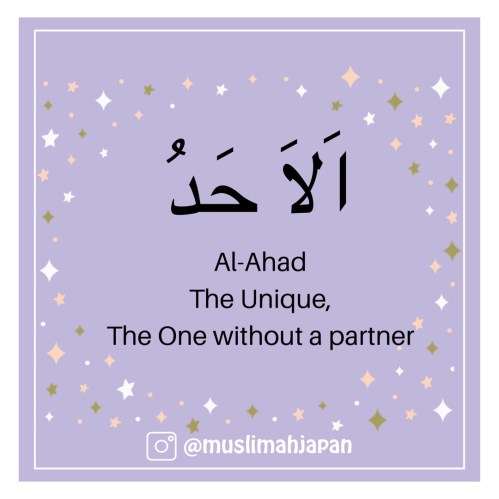
Ahad means unique. This word is more emphatic than wahid (the only one). Ahad negates partnership in every sense.

(اَللهُ الصَّمَدُ (٢

“Allah is As-Samad, The Self-Sufficient.”

As-Samad means the eternally besought of all, The Self-Sufficient. All creation turn to Him and they depend on Him, to fulfill their needs. On the other hand, all created beings have needs and are dependent on others to fulfill their needs.  Allah is not in need of any of His creation in any way, as nothing they can do can better or benefit His already perfect state.  This attribute of self-sufficiency invites the believers to reflect on the purpose and the goals of their worship.  Most people worship as if they are doing God a favor.  The purpose of human creation is to worship Allah because all human beings have a need to worship Him.  He has no need for or from them.  Human beings need to worship and glorify God because obedience to divine law is the key to their success in both this life and the next.

(لَمْ يَلِدْ وَلَمْ يُو لَدْ (٣

“He does not give birth nor He was born.”

This is called Tawheed of purity. Nothing came out of Him nor He come out of anything. This verse describes another aspect of Allah’s Unique Oneness.  False religions generally represent God in human terms by either giving Him human characteristics and or human form.  This verse deals primarily with two distinct characteristics of human beings and other living creatures in general: coming into existence by being born and procreating by giving birth.

“Nor was He born” rejects the concept that Jesus was God, because he was born.  For God to be born, He must first have not existed, which contradicts the basic unique divine attribute of eternal existence.

(وَلَمْ يَكُن لَّهُ كُفُوًا اءَحَدٌ (٤

“And there is none comparable to Him.”

He has no equal. Allah closes the chapter with a restatement of the opening verse.  If God is unique, nothing can be equal to Him.  If nothing is equal to Him, then He alone is unique.  If He alone is Self-Sufficient and all creation is in need of Him, nothing in creation can be equal to Him.  If He does not bear offspring, nor did anyone or anything give birth to Him, nothing or no one can be equal to Him as every created being came into existence after a period of non-existence.  Every created being has something similar to it, called its pair, or something resembling it, called its equal.  If the Creator were from one or other of these species He would have an equal and a similitude.


言え:「かれはアッラー(神)、唯一なる御方。」(1)

「アッラーフッ=サマド(アッラーは、あらゆる被造物が必要とする自存する主」(2)

「御産みなさらないし、御産れになられたのではない。」(3)

「かれに比べ得る、何ものもない。」(4)

解釈
(1)「言え」とは、私たちが信じ、認識する「かれはアッラー(神)、唯一なる御方」という明白な主張で、唯一性がかれのみに限定され、かれのみが完全性、そして最も美しい御名と究極の性質を有していることを意味します。かれは唯一無比かつ無類の存在です。

(2)「アッラーフッ=サマド」 アッラーは、あらゆる被造物が必要としている自存する主です。天界・下界のあらゆる生物は、かれをこの上なく必要とします。アッラーはすべての性質において完璧であり、完全なる知識を有する全知者であり、最も完全な寛大さを持つ寛大なる御方であり、完全なる慈悲を持つ最も慈悲深き御方であるため、それらは自らの必要性をかれに訴え、自らの諸事の解決を願います。

(3)「御産みなさらないし、御産れになられたのではない」のは、一切の必要性から解放された、かれの完全無欠性によるものです。

(4)「かれに比べ得る、何ものもない」のは、かれの御名と性質、そしてかれの行いを含めたすべてのものです。かれはあらゆる不完全なものから遠く隔たれた御方なのです。


img_5521

[Al Ahad, written in Arabic]